Do You Accept, or Except?

This is another set of words that I see misused often. In news media, magazines, and yes, even in print. Your editor really is your best friend!

Instead of explaining the ridiculous English rules, I try to find ways to help you, and me, remember how to use these words correctly. They are not interchangeable.

Accept means you allow something; you agree; you take it as it is.

Except means “only if”; it is a type of condition you set upon someone or something.

I accept your proposal. I cannot accept this gift.

(If you said “I cannot except this gift”, it would make no sense). 

You can either accept, or not accept, something.

I agree, except for the part where I do not get paid.

Everything looks good, except for your references.

Most of this looks good, but there is an exception. There is a part I do not agree with.

Accept means to agree (mostly), and except means you agree, but for one part.

Unfortunately, they both seem to be interchangeable. The best way I remember is accept means yes, and except means no. It will not work in every situation, but it will work in most.

I Am Too Tired to Bring the Two Dishes to the Cookout…

Now that is a mouthful! This is also one of those spelling errors that makes me want to scratch my eyes out every time I see it.

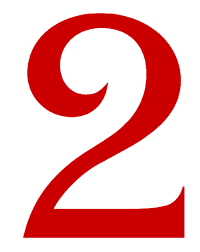
Two. It is a number. That is it. Nothing more, and nothing less. It is Two. Not one, or three.

The Number Two Image

Too means in addition to, or also. “We will go too.” “I want to see it too.” If more than one person is involved, you can likely use “too”, and not make me scratch my eyes out. Think many people. Or think just overwhelmed. Too tired, too stressed, too busy. It is too much.

To is nothing more than a preposition that sets up a sentence. It can be before a noun, or a verb. “I want to go to Chicago.” I want to dance.” “I want to not ever see the words to, too, and two misused in public.”

People Always Ask Me…

…at least twice a week.

Why I read, edit, and review books, but I do not write.

I actually do write. I write a lot. I have stacks of stories, some spilling over into sequels. I have fiction, and I have personal stories that I know would fly off the shelves. But I cannot share those. Not yet.

I like reading stories because it is my escape. My chance to go somewhere else other than my crazy 50-hour-work-week-three-girls-still-at-home-no-one-knows-how-to-do-chores life 🙂

I like editing because I have always had a love for the English language (as ridiculous as it is, and it is ridiculous), and I want to share what I know with new authors so they can be the best writer possible.

I have met so many amazing writers, and am glad that I am able to share in their success, even if it is behind the scenes. I have new friends, and I have read stories that I may not have otherwise found.

Nothing beats a good story!

I Would Like My Dessert, in the Desert

I am unsure why this spelling error is so difficult, but it is one of the most common that I have seen.

I wish I had a quick cheat to remember which one is which (Maybe you do?) but I really don’t.

Desert is a noun, and a verb. You can desert someone (verb), or you can leave a person in the desert (noun).

Dessert is just something sweet that we all wish we could eat in excess and never pay the consequences.

Anymore, or Any More? Which One To Use, and When To Use It!

The lovely English language has several words that can be written two ways, and mean two different things, when used properly, in two different ways. (Yes; more comma-abuse by yours-truly!)

Store Image Pictures 008

Anymore, or any more? Awhile, or a while?

Anymore is considered a misspelling by many readers, writers, and editors. Most feel that any more is only interchangeable with any longer, and that anymore is an adjective that should never be used. Because they feel it is not a real word.  As a note, when I am reading something and see this, it doesn’t make me cringe.  When I am editing and see it, I change it to any more.

Awhile should only be used when it can be substituted with ‘for a while’, and still make sense.

“We waited awhile before getting our table.” or “We waited for a while before getting our table.”

This is considered an adverb.

The word ‘while’ can be used as a noun, and in this case you need to say ‘a while’, and not ‘awhile’.

“I just talked to him a while ago.” Saying “I just talked to him for a while ago,” does not make sense. This lets you know it is a noun in this sentence, and not an adverb.

I think most difficult English language situations can be figured out by substituting the word/phrase that is in question, and see if it still makes sense.

What ones trip you up?

They’re on their way, and will call you when they get there.

How difficult is that to say? Try writing it. Possessive nouns, adjectives, and verbs will drive you mad.

They’re is means they are…. But how did we get won’t from will not? How did we make that leap?

The English language is the most difficult language to learn. And now try writing a story in it.

While dealing with your crazy-nutcase-editor who tells you I-before-E and pay attention.

I have 4 pages full of these instances and how to learn them fast, so you can write your book and let your editor do the hard work.

More to come tomorrow!